Dolomites · Photographer's guide

Lago di Carezza, the rainbow lake.

The exact spot. The reflection window almost everyone misses. The gear and settings I used – and the months when the water actually mirrors the Latemar.

One of the most photographed lakes in the Dolomites
Lago di Carezza, Dolomites · the Latemar mirrored
GPS 46°24'33" N, 11°34'34" E
Best season Late May–June, October
Best time Sunrise · windless
Permit No
Difficulty Easy · car access
The shot

Still water, or it isn't the shot.

Lago di Carezza is small – barely 300 m long and 140 m wide – but it punches far above its size. Underground springs feed it straight from the Latemar, and on the right morning the whole range mirrors in the surface so cleanly it looks fake. The Ladin name, Lec de Ergobando, means "lake of rainbows," and the emerald-to-turquoise shift in the water is real, not a preset invention.

Here's the thing nobody tells you: of all the famous Dolomites lakes, this is the one where conditions matter most. The mirror effect needs two things at once – calm air and direct sun on the Latemar. Get a breeze and the reflection breaks up; get cloud and the emerald color falls flat. The lake sits in a small wind-sheltered depression, so even a light breeze is usually survivable, but the margin is thin. The shot is the reflection, so plan around the reflection.

Shoot at sunrise on a clear, calm morning. That's when the Latemar catches alpenglow, the water is at its stillest, and the tour buses haven't arrived from Bolzano yet. By mid-morning the main viewing platform is shoulder-to-shoulder and the light goes flat. There's a fence around the entire lake – it's a protected natural monument, no swimming, no climbing down to the shore – so every angle is shot from the elevated loop trail. That's a constraint, not a problem: the elevated path is exactly where the reflection lines up.
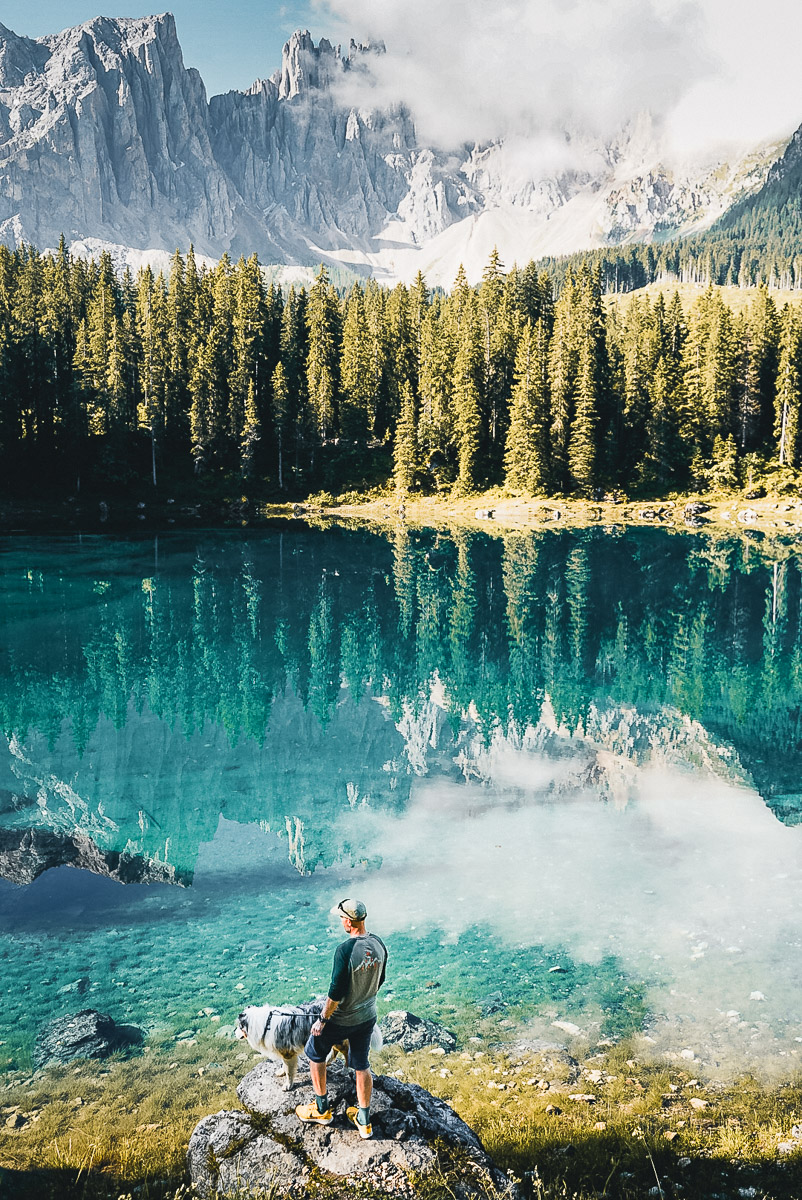
Finge and Koda at Lago di Carezza, Dolomites
Scouting the loop trail with Koda before the crowds arrived.

Camera settings for the reflection

Camera
Sony A7C (ILCE-7C)
Lens
Tamron 28–75mm F2.8
Focal length
28mm
Aperture
f/5.0
Shutter
1/160s
ISO
100
Format
ARW · 4000×6000
Preset
Alpine 03

One technical note that matters here more than most places: if you reach for a circular polarizer, go easy. Crank it all the way and it kills the very reflection you came for. Dial it back until the Latemar comes back into the water, using it only to cut glare off the trees and rocks. On focal length, 28mm covers the full lake-and-peaks frame comfortably; go wider for more foreground, or longer to compress the Latemar so it looms larger behind the water. Both work.

Timing

When to go.

Two windows give you the cleanest reflection and the fullest water. Late May–June and October. The lake is fed by snowmelt and springs, so the water level – and the color – swings a lot through the year.

Apr
Okay
Snowmelt starting, water level rising. Snow still on the Latemar for contrast. Reflection workable on a calm day, but weather is hit or miss and some facilities not yet open.
May–Jun
Best
The window. Snowmelt fills the lake to its fullest and greenest, snow still caps the Latemar, days are long, and crowds haven't peaked. Calm sunrise mornings here are as good as the Dolomites get.
Jul–Aug
Skip
Peak crowds. Tour buses from Bolzano arrive through the morning and the platform is packed. Still shootable if you're on the loop trail before sunrise, but you'll be working around people fast. Midday is a write-off.
September
Okay
Crowds drop after the first week, light turns golden, weather is reliable. Water level starts dropping as the springs slow – still good, just not peak emerald.
October
Best
The second window. The larches and conifers around the lake turn, the contrast against the green water is unreal, and the crowds are a fraction of summer. First snow possible on the Latemar. Water can be lower – check recent shots before committing.
Where to stand

Two spots that actually work.

The famous reflection comes off the main platform. The second is a quieter angle round the west side. Both are real GPS points from my own shoot, marked below.

Overview
Shot positions
Main platform reflection
West side – quieter angle
Logistics

How to get there.

By car

From Bolzano: ~30–40 min east via the SS241 through the Eggental / Val d'Ega. Easy, fully paved.

From Cortina d'Ampezzo: ~2 hr via the mountain passes.

From Val di Fassa: ~30 min up over the Passo di Costalunga (Karerpass).

Parking

P1 (main lot): right across the road from the lake, a short pedestrian tunnel leads under the road to the platform. ~300 cars, toilets inside the tunnel.

Cost: first 15 min free, then roughly €2–4 for 1–2 hr, up to ~€24 for 24 hr (2025/26 rates). Card or cash.

P2 (Via Bellavista): ~1 km out, 2 hr free with a dashboard clock. 10–15 min walk in.

Without a car, and the loop

Bus 180 runs from Bolzano station to the lake roughly every 20–30 min, about an hour each way – genuinely viable if you're based in Bolzano. Buy from the driver or load a südtirolmobil card. The lake is also wheelchair accessible from P1 via the tunnel.

The full loop trail is short – 20–30 minutes, easy and elevated the whole way behind protective fencing. Walk the whole thing before you settle on an angle; the reflection lines up differently from each side.

Parking rates and bus schedules change year to year. Verify on the official Carezza tourism site and südtirolmobil.info before you go.

Want the exact Alpine look?

Every photo on this page was edited with Alpine 03 from my Lightroom preset pack. Six presets per pack, calibrated for high-contrast alpine light, real RAW files behind every preview. 30-day refund if it's not for you.

See the Alpine pack
More guides

Other locations.

Photographer's guides to other spots I've shot, same treatment as this one.